Implementations for the GTF module. More...
#include "gtf.h"#include <ctype.h>#include <stdbool.h>#include <stdint.h>#include <stdlib.h>#include <string.h>#include <Python.h>#include "../classes/GtfDict/GtfDict.h"#include "../common.h"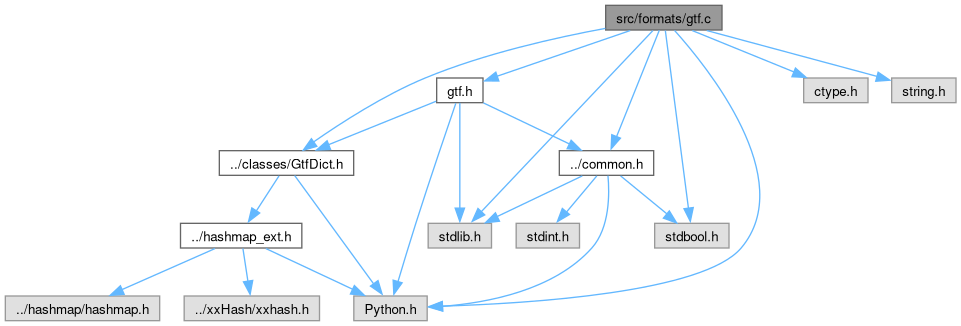
Macros | |
| #define | GTF_NONE_VAL '.' |
| #define | MAX_2 0x10000 |
| #define | MAX_4 0x110000 |
| #define | IS_CONTINUATION(c) |
| #define | IS_1LEAD(c) |
| #define | IS_2LEAD(c) |
| #define | IS_4LEAD(c) |
| #define | IS_URL_ENCODED(str, i, len) |
| #define | REALLOC_EXPR(buf, alloc, min_expr, alloc_expr) |
| Helper macro to reallocate a buffer and update the allocation size. | |
Functions | |
| bool | validGTFLineToParse (const char *line, size_t len) |
| Determines if the provided line is a valid GTF line that can be parsed safely. | |
| static uint8_t | hex_to_byte (char c) |
| Converts a hex character to half a byte. | |
| static PyObject * | PyUnicode_FromPercentEncoded (const char *str, size_t len) |
| Converts a percent encoded string to a Python unicode string. | |
| static PyObject * | lookup_str (hashmap_t *map, const char *key, size_t len) |
| Looks up a string in the hashmap, and if it doesn't exist, creates it. | |
| static int | add_key_value (hashmap_t *restrict attributes, hashmap_t *restrict attr_keys, hashmap_t *restrict attr_vals, const char *restrict key, size_t keyLen, const char *restrict value, size_t valLen, PyObject *atrr_tp) |
| Adds a key-value pair to the GTF dictionary. | |
| static int | handleGTFAttributes (GtfDict *dict, const occurrence_t *lastoccurrence, PyObject *attr_tp, hashmap_t *restrict attr_keys, hashmap_t *restrict attr_vals) |
| Handles the attributes of a GTF line and adds them to the provided dict. | |
| static PyObject * | process_token_str (const occurrence_t *token, hashmap_t *attr_vals) |
| Processes a token as a string. | |
| static PyObject * | process_token_int (const occurrence_t *token) |
| Processes a token as an integer. | |
| GtfDict * | createGTFdict (const occurrence_t *token, PyObject *attr_tp, hashmap_t *restrict attr_keys, hashmap_t *restrict attr_vals) |
| static char * | gtf_percent_encode (char *restrict buf, size_t *len, size_t *alloc, const char *restrict in, size_t inLen) |
| Percent encodes restricted GTF characters. | |
| static char * | write_unicode_encoded (PyObject *unicode, char *buf, size_t *size, size_t *alloc) |
| Returns the string representation of a Python string, with restricted characters percent encoded. | |
| char * | write_owned (char *restrict buf, size_t *restrict len, size_t *alloc, const char *restrict in, size_t inLen) |
| Writes a string to the output buffer, reallocing if necessary. | |
| static int | iterate_to_str (void *const context, struct hashmap_element_s *const e) |
| char * | GtfDict_dump (GtfDict *restrict const self, char *restrict in, size_t *restrict len, size_t *restrict alloc) |
| Dumps the contents of a GtfDict to a string. | |
| int | GtfDict_as_annotation (PyObject *restrict object, long *restrict start, long *restrict end) |
| Converts a GtfDict or mapping object to an annotation. | |
Variables | |
| static const char | missing = '.' |
| static const char | break_char = '\t' |
| static const char | attr_break [] = " \"" |
| static const char | attr_finish [] = "\";" |
| const char * | keywords [CORE_FIELD_COUNT] |
| Array containing the keywords of the GTF fields. | |
| const uint8_t | keyword_sizes [CORE_FIELD_COUNT] = {7, 6, 7, 5, 3, 5, 7, 5} |
| Array containing the sizes of the keywords. | |
| const PyTypeObject * | keyword_types [CORE_FIELD_COUNT] |
| Array containing the types of the keywords. | |
Detailed Description
Implementations for the GTF module.
Macro Definition Documentation
◆ GTF_NONE_VAL
| #define GTF_NONE_VAL '.' |
◆ IS_1LEAD
| #define IS_1LEAD | ( | c | ) |
◆ IS_2LEAD
| #define IS_2LEAD | ( | c | ) |
◆ IS_4LEAD
| #define IS_4LEAD | ( | c | ) |
◆ IS_CONTINUATION
| #define IS_CONTINUATION | ( | c | ) |
◆ IS_URL_ENCODED
| #define IS_URL_ENCODED | ( | str, | |
| i, | |||
| len ) |
◆ MAX_2
| #define MAX_2 0x10000 |
◆ MAX_4
| #define MAX_4 0x110000 |
◆ REALLOC_EXPR
| #define REALLOC_EXPR | ( | buf, | |
| alloc, | |||
| min_expr, | |||
| alloc_expr ) |
Helper macro to reallocate a buffer and update the allocation size.
- Parameters
-
buf the buffer to reallocate alloc the allocation size to update min_expr the minimum allocation size alloc_expr the expression to calculate the new allocation size
- Note
- This does use while, but should be fine if you just need an if
Function Documentation
◆ add_key_value()
|
inlinestatic |
Adds a key-value pair to the GTF dictionary.
- Parameters
-
attributes the dictionary to add the key-value pair to attr_keys the cache of previously seen attribute keys attr_vals the cache of previously seen attribute values key the key to add keyLen the length of the key value the value to add valLen the length of the value atrr_tp Python Dict or None, if dict then its key->Callable
- Returns
- -1 on error
This is a convenience function to improve readability of the handleGTFAttributes function


◆ createGTFdict()
| GtfDict * createGTFdict | ( | const occurrence_t * | token, |
| PyObject * | attr_tp, | ||
| hashmap_t *restrict | attr_keys, | ||
| hashmap_t *restrict | attr_vals ) |
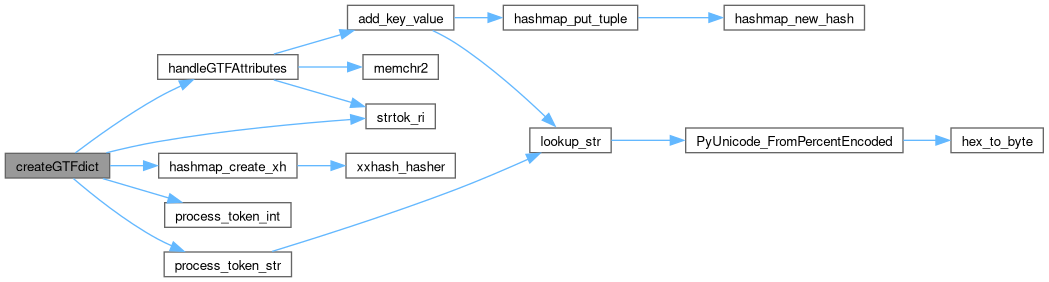
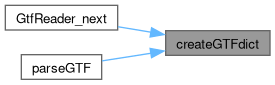
TODO: as of right now, the profiler puts attribute handling to be the hottest part of GTF handling, putting it at 79% here, and 29 % in just hashing time. I wouldn't put this down to hashing being slow, it can't be any faster literally. It's probably down to the sheer number of hashes done, probably down to our caching solution. I think, a solid fixed width hash table for storage of cached keys and values would be an improvement. Additionally, if we could somehow avoid doing the work again accross rows; one would expect for the attributes to carry over the rows, and thus the hashes to be similar. Also, the hashmap that we have here, hashmap.h I think does a poor job of handling resizing, and it does a lot of resizing. However swapping hash maps is a lot of work.
◆ gtf_percent_encode()
|
static |
Percent encodes restricted GTF characters.
- Parameters
-
buf the buffer to store the encoded string len the length of the encoded string. Must be a valid pointer alloc the allocated size of the buffer in the string to percent encode inLen the length of the string to percent encode
- Returns
- a newly allocated string with percent encoded characters
- Note
- buf may be NULL, if there is no pre-allocated buffer
- Warning
- regardless of whether buf is NULL. len and alloc must be valid pointers; set to 0 if buf is NULL


◆ GtfDict_as_annotation()
| int GtfDict_as_annotation | ( | PyObject *restrict | object, |
| long *restrict | start, | ||
| long *restrict | end ) |
Converts a GtfDict or mapping object to an annotation.
- Parameters
-
object the object to convert start a pointer to the start of the annotation end a pointer to the end of the annotation
- Returns
- 0 on success, -1 on failure
◆ GtfDict_dump()
| char * GtfDict_dump | ( | GtfDict *restrict const | self, |
| char *restrict | in, | ||
| size_t *restrict | len, | ||
| size_t *restrict | alloc ) |
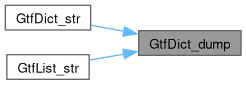
Dumps the contents of a GtfDict to a string.
- Parameters
-
self the GtfDict to dump in the input buffer to write to len a pointer to the length of the output string alloc a pointer to the size of the allocated output string
- Returns
- the output buffer
- Note
- if no allocation is done, in is returned unchanged
- Warning
- this function takes ownership of in and will free it if necessary

◆ handleGTFAttributes()
|
inlinestatic |
Handles the attributes of a GTF line and adds them to the provided dict.
- Parameters
-
dict the dict to which the attributes should be added lastoccurrence the last occurrence of the attributes in the GTF line attr_tp a mapping containing the callable to use to convert the attribute values to the correct type, or None attr_keys set of previously seen attribute keys attr_vals set of previously seen attribute values
- Returns
- -1 on error
This function parses the key-value section of the GTF line. It utilizes a hashmap cache to store the keys of the attributes, and utilizes a unique encoding processing function


◆ hex_to_byte()
|
inlinestatic |
Converts a hex character to half a byte.
- Parameters
-
c the character to convert
- Returns
- the half a byte represented by the character

◆ iterate_to_str()
|
static |

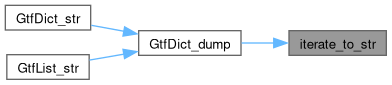
◆ lookup_str()
|
inlinestatic |
Looks up a string in the hashmap, and if it doesn't exist, creates it.
- Parameters
-
map the hashmap to look up the string in key the key to look up len the length of the key
- Returns
- the found or created object as a new reference, or NULL on error


◆ process_token_int()
|
inlinestatic |
Processes a token as an integer.
- Parameters
-
token the token to process
- Returns
- the processed token

◆ process_token_str()
|
inlinestatic |
Processes a token as a string.
- Parameters
-
token the token to process attr_vals the cache of previously seen attribute values
- Returns
- the processed token
This function processes a token as a string, meant to be used during core field parsing


◆ PyUnicode_FromPercentEncoded()
|
static |
Converts a percent encoded string to a Python unicode string.
- Parameters
-
str the token to convert len the length of the token
- Returns
- a Python unicode string or NULL on error


◆ write_owned()
| char * write_owned | ( | char *restrict | buf, |
| size_t *restrict | len, | ||
| size_t * | alloc, | ||
| const char *restrict | in, | ||
| size_t | inLen ) |
Writes a string to the output buffer, reallocing if necessary.
- Parameters
-
buf The output buffer len The length of the output buffer alloc a pointer to the size of the allocated output buffer in The string to write inLen The length of the string to write
- Returns
- The updated output buffer

◆ write_unicode_encoded()
|
static |
Returns the string representation of a Python string, with restricted characters percent encoded.
- Parameters
-
unicode the string to encode buf the buffer to write to size the size of the buffer alloc the size of the allocated buffer
- Returns
- a newly allocated string with percent encoded characters


Variable Documentation
◆ attr_break
|
static |
◆ attr_finish
|
static |
◆ break_char
|
static |
◆ missing
|
static |
Generated by
 1.16.1